by Stipe Galić
Cultural heritage is not only about preservation, ownership, or museum access. It is also a matter of cultural rights: the right of communities to encounter their foundational objects within the historical, linguistic, and spiritual context that makes them intelligible (CoE 2005). That is especially true when an object is not merely an artwork, but a liturgical, legal, and linguistic witness whose meaning depends on the tradition that produced it. In such cases, restitution is not simply the relocation of property; it is the repair of a contextual mismatch.
The international dialogue on cultural heritage management has increasingly pivoted from a defensive, retentionist logic toward a more proactive language of restorative justice (Visconti 2023; Campfens 2023; Knudsen et al. 2022). Türkiye has become one of the most prominent and articulate voices in this evolving conversation. Its position is not limited to the recovery of objects removed from Anatolia; Türkiye has also increasingly participated in wider international debates concerning cultural sovereignty, historical displacement, and the legitimacy of imperial-era removals (CP 2025; TM 2025; Ditmars 2026; Geranpayeh 2026).
Notably, Türkiye has sharpened its stance by publicly supporting Greece’s request for the return of the Parthenon Marbles from the British Museum, going as far as challenging the existence of a documented Ottoman authorisation for their removal (Boz 2024, paras. 408-410). Even if the British Museum could show an authentic firman for marble removal, the underlying question would remain: can imperial authorisation, granted without meaningful consent from the cultural community concerned, permanently legitimise the removal or retention of foundational heritage? In this age, shaped by post-Napoleonic heritage norms and modern ideas of cultural rights, contemporary restitution debates increasingly suggest that it cannot (Renold 2016; Campfens 2023).

We should therefore rise above mere legal ownership and consider the principle of contextual integrity. Just as the Parthenon Marbles lose their structural and narrative logic when viewed as isolated sculptures in a London gallery rather than as part of an Athenian temple, foundational cultural treasures lose part of their primary function when separated from their origins and communities (CoE 2005). It is equally important that this principle be observed not only when a country requests repatriation, but also when it considers the repatriation of objects in its own custody. In that regard, Türkiye’s role in this field is not limited to claims concerning its own national heritage. Recent public reports indicate that Turkish authorities identified a group of objects believed to be of Nigerian origin and opened the way for formal restitution discussions, pending Nigeria’s identification and claim (MoMAA. 2026; Vanguard News 2026; Anyanwu, 2026).
This episode is important because it shows Türkiye’s willingness to treat cultural-property questions as reciprocal and international, rather than merely as claims advanced in its own favour (MoMAA. 2026; Anyanwu, 2026). This offer should not come as a surprise to anyone familiar with the broader Ottoman-Turkish diplomatic tradition. The Bibliotheca Corviniana return precedent is particularly instructive. In 1869 and 1877, the Sultans returned priceless Corvinian codices to Hungary, acknowledging that these manuscripts, although long preserved in Ottoman custody, retained a special relationship to the cultural community from which they came (National Széchényi Library n.d.).
In the year of the 500th anniversary of the Battle of Mohács, I believe that the time has come to address one singular volume kept in the Topkapı Palace of Istanbul that transcends the status of a mere royal library book: the Glagolitic Missal of Hrvoje Vukčić Hrvatinić (Žubrinić 1995a; Facsimile Finder n.d.; National and University Library in Zagreb, n.d.). To illustrate its significance, one should begin with its role as an exceptional liturgical book and as a material witness to a distinctive legal-canonical tradition (Žubrinić 2019; Kuhar n.d). Written around 1403-1404 in Dalmatia for Duke Hrvoje Vukčić Hrvatinić, the manuscript is the most richly illuminated Glagolitic work to survive from the Middle Ages (Žubrinić 1995a; Facsimile Finder n.d.). Its creation, overseen by the scribe Butko, represents a synthesis of high Gothic artistic traditions and the unique Slavic script known as Glagolitic (Žubrinić 1995a, 1995b; Facsimile Finder n.d.). It stands out from a linguistic perspective as well, as the manuscript’s language departs from the Old Church Slavonic norm, weaving a dominant local Ikavian reflex of jat and numerous Croatian lexical features directly into its lines (Nazor 1973).
Furthermore, the Missal is not merely an aesthetic and religious object. It is one of the highest material expressions of the Croatian Glagolitic liturgical tradition, whose distinctive canonical position was established by the recognition issued by Pope Innocent IV in 1248 (Žubrinić 2019; Kuhar n.d). This recognition affirmed the exceptional privilege of using the Old Church Slavonic language and the Glagolitic script in the Catholic Mass. The tradition of “Slavic Liturgy” remained unique to the Croatian lands for centuries (Žubrinić 2019; Kuhar n.d). It distinguished the regional Catholic experience from the rest of the Latin-mandated Western Church, and Hrvoje’s Missal stands among the most perfected medieval expressions of this liturgical right and tradition (Žubrinić 1995a; Facsimile Finder n.d.; Kuhar n.d). Significantly, the importance of Hrvoje’s Missal extends beyond its parchment folios; it belongs to the manuscript tradition that culminated, within the same century, in the first book ever printed in a Slavic language and Glagolitic script (Žubrinić 1995a, 1995b, 2019). The Misal po zakonu rimskoga dvora, published in 1483, just 28 years after Gutenberg’s Bible, is essentially the printed realisation of the broader Croatian Glagolitic liturgical culture preserved in the manuscript culture to which Hrvoje’s Missal also belongs (Žubrinić 1995b, 2019).
A responsible restitution argument must address the common concern that the return of one object may open the door to broad claims against entire museum collections (Renold 2016; Visconti 2023; Campfens 2023). Hrvoje’s Missal does not require such a general precedent. Other Croatian Glagolitic missals have survived, and its significance does not rest on absolute uniqueness. Rather, its exceptional status lies in the unusually clear convergence of features: a defined liturgical purpose, a long-recognised association with the Church of St. Michael in Split, a distinctive Croatian Glagolitic tradition, and a surviving community of cultural and ecclesiastical reference (Žubrinić 1995a; Facsimile Finder n.d.; Kuhar n.d).
Although the exact path by which the Missal entered Ottoman possession remains untraceable, and although knowledge of its existence was lost in Europe for centuries, the manuscript is not comparable to artifacts whose origins are uncertain, whose original setting has vanished, or whose institutional heirs can no longer be identified. Hrvoje’s Missal remains clearly related to a surviving ecclesiastical and liturgical tradition (Žubrinić 1995a, 2019; Kuhar n.d). Its return would therefore not imply a mandate to dismantle Topkapı’s collections, but would recognise a narrowly defined case in which liturgical function, cultural continuity, and symbolic importance strongly converge. The Corviniana precedent shows that manuscripts long preserved in Ottoman custody, in exceptional cases, could be returned when their foundational relationship to another cultural community was recognised (National Széchényi Library n.d.).
In light of this unique status, I propose that Croatia and Bosnia and Herzegovina should jointly petition the Republic of Türkiye for the repatriation of this masterpiece. Such a joint approach would reflect the manuscript’s actual historical structure. Croatia’s claim arises most directly from the Missal’s Split provenance, its Glagolitic script, and its Roman-Catholic liturgical tradition and function (Žubrinić 1995a; Facsimile Finder n.d.; Kuhar n.d). Bosnia and Herzegovina’s interest should not be understood only through the fact that Hrvoje Vukčić Hrvatinić was of Bosnian origin. On the contrary, as the great duke of Bosnia, prince of Donji Kraji, and duke of Split, Vukčić embodied precisely the medieval political space in which the Bosnian interior, the Dalmatian coast, Croatian Glagolitic culture, and the Roman-Catholic liturgical world intersected (Dedić 2023). Hrvoje’s Missal has been described as the only known Glagolitic liturgical book used east of the Krka and Vrbas rivers, thus reinforcing this shared horizon (Leksikografski zavod Miroslav Krleža n.d.).
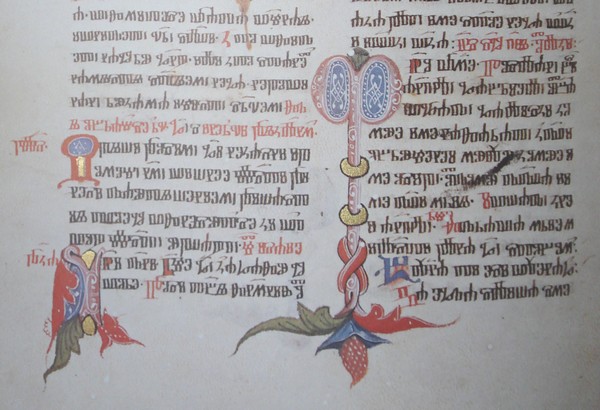
The Missal therefore belongs not only to the Croatian Glagolitic tradition, but also to the wider Bosnian-Herzegovinian space in which Croatian Glagolitic liturgical culture reached remarkably far east. In modern Bosnia and Herzegovina, whose multi-ethnic and multi-religious character reflects the layered complexity of its medieval past, such heritage can be recognised both as a specific Catholic inheritance and as part of the country’s wider historical depth. The manuscript’s intended destination in Split gives Croatia the clearest institutional locus of return; in cultural and historical terms, however, the claim is genuinely shared (Žubrinić 1995a; Facsimile Finder n.d.). This opens the possibility of a model in which Croatia and Bosnia and Herzegovina jointly recognise, present, and safeguard the Missal as part of a common medieval inheritance.
Turkish reporting has identified Croatia as one of the leading countries in the return of cultural property to Türkiye, with recent ministry data placing it second only to Germany (Turkish Minute 2025). This bilateral history of cultural cooperation provides the diplomatic foundation for a high-level restorative solution: one that would do more than resolve a 500-year contextual mismatch (Žubrinić 1995a; Facsimile Finder n.d.; Visconti 2023). It would show that displaced heritage need not be approached as a zero-sum contest between possession and loss. Türkiye should not be asked to renounce its custodial history. On the contrary, any serious proposal for the Missal’s return should begin by acknowledging that the manuscript survived because it was preserved within the Ottoman and Turkish imperial and museum tradition.
This is precisely why the Corviniana precedent matters. The shared history of Ottoman custody and the anniversary of Mohács — the consequential battle that arguably facilitated the transfer of the Missal into Ottoman hands — reinforces its symbolic power. The lesson of Corviniana should now be applied to Hrvoje’s Missal, as it belongs to the same moral family of cases: not ordinary museum property, but a manuscript whose historical path passed through the great political and cultural ruptures of Central and Southeastern Europe. Therefore, its return would not deny the history of Ottoman and Turkish custody, but instead allow that custody to culminate in restoration.
And that restoration matters beyond the manuscript itself. In a region where national rivalries have too often transformed common history into contested ownership, Hrvoje’s Missal offers another possibility. Its identity is layered rather than narrow: Croatian Glagolitic, Split liturgical, Bosnian-Dalmatian political, Roman-Catholic, and preserved through Ottoman-Turkish custody. Precisely because it has such a layered history, the Missal could help shift the conversation from exclusive possession to shared recognition: not as a prize claimed against others, but as a witness through which different communities may recognise their own part in a common medieval inheritance.
For Türkiye, supporting such a solution would be consistent with the principles it has increasingly advanced in 21st-century heritage debates: that we should understand foundational objects in relation to the communities and landscapes that produced them. Thus, for Croatia and Bosnia and Herzegovina, the return of the Missal would be the restoration of one of the central witnesses of their medieval liturgical and literary civilisation: almost, in a restrained but meaningful sense, the recovery of a cultural “source code” after five centuries of absence (Žubrinić 1995a; Facsimile Finder n.d.). For Europe more broadly, it would offer a rare and constructive example of heritage repair: not the condemnation of custody, not the humiliation of a museum, and not the victory of one national memory over another, but the transformation of preservation into renewed common belonging.
Reference List
Anyanwu, Samuel. 2026. “Turkey Identifies 76 Nigerian Artifacts, Paving Way for Repatriation and Stronger Cultural Ties.” Federal Ministry of Information and National Orientation. January 22, 2026.
Boz, Zeynep. 2024. Statement to the Intergovernmental Committee for Promoting the Return of Cultural Property to its Countries of Origin or its Restitution in Case of Illicit Appropriation (ICPRCP), 24th Session. Paris, May 29–31.
Campfens, Evelien. 2023. Cross-border Claims to Looted Art Research for IURI Committee. European Parliament Policy Department for Citizens’ Rights and Constitutional Affairs.
Caspian Post. 2025. “Türkiye Recovers 180 Smuggled Artifacts in 2025.” December 30, 2025.
Council of Europe. 2005. Framework Convention on the Value of Cultural Heritage for Society (Faro Convention). October 27.
Dedić, Enes. 2023. The Bosnian Kingdom and the Serbian Despotate (1402–1459). Cazin – Sarajevo: University of Sarajevo – Institute for History.
Ditmars, Hadani.. 2026. “Canada Returns 11 Artefacts to Turkey in the First Repatriation between the Countries.” The Culture Newspaper, April 4.
Facsimile Finder. n.d. “Hrvoje Missal: Facsimile Edition.” Accessed May 8, 2026. https://www.facsimilefinder.com/facsimiles/hrvoje-missal-facsimile
Geranpayeh, Sarvy. 2026. “Meet the Global Taskforce Working to Recover Stolen Cultural Heritage.” The Art Newspaper, January 19.
Knudsen, B. Timm, J. Oldfield, E. Buettner, and E. Zabunyan, eds. 2022. Decolonizing Colonial Heritage: New Agendas, Actors and Practices in and beyond Europe. Critical Heritages of Europe series. London: Routledge. https://doi.org/10.4324/9781003100102.
Kuhar, Kristijan. n.d. “Glagolitic Liturgy,” Staroslavenski institut. Accessed May 8, 2026. https://stin.hr/en/glagolitic-liturgy/
Leksikografski zavod Miroslav Krleža. n.d. “Hrvojev misal.” Hrvatska enciklopedija,. Accessed September 6, 2026.
MoMAA. 2026. “Turkey Offers to Return 76 Nigerian Artifacts: A New Chapter in African Art Repatriation.” February 2, 2026.
National and University Library in Zagreb. n.d. “Missale glagoliticum Hervoiae ducis Spalatensis.” National and University Library in Zagreb – Digital Collections. https://digitalna.nsk.hr/?pr=i&id=19404.
National Széchényi Library. n.d. “History of the Library.” Bibliotheca Corvina Virtualis. Accessed September 7, 2026. https://corvina.hu/en/about-corvinas/history/history-of-the-library
Nazor, Anica. 1973. “Karakteristike jezika i pisma Hrvojeva misala.” In Missale Hervoiae ducis Spalatensis croatico-glagoliticum: Transcriptio et commentarium, 508–511. Zagreb–Ljubljana–Graz: Staroslavenski institut – Mladinska knjiga – Akademische Druck- u. Verlagsanstalt.
Renold, Marc-André. 2016. Cross-border Restitution Claims of Art Looted in Armed Conflicts and Wars and Alternatives to Court Litigation. European Parliament Policy Department for Citizens’ Rights and Constitutional Affairs.
Turkish Minute. 2025. “Turkey Has Retrieved 110 Cultural Artifacts from Abroad in 2025: Ministry.” December 2, 2025.
Vanguard News. 2026. “Turkey Identifies 76 Nigerian Artifacts, Moves Begin for Repatriation.” January 22, 2026.
Visconti, Arianna. 2023. “Restitution and Return of Cultural Property between Negotiation and Restorative Justice: Time to Bridge the River.” The International Journal of Restorative Justice 6, no. 1: 71–94. https://doi.org/10.5553/TIJRJ.000128
Žubrinić, Darko. 1995a. “Croatian Glagolitic Manuscripts Kept Outside of Croatia.” CroatianHistory.net. Accessed May 8, 2026.
Žubrinić, Darko. 2019. “Hrvatski glagoljaši latinisti.” CroatianHistory.net, accessed May 8, 2026. https://www.croatianhistory.net/etf/latgl.html
Žubrinić, Darko. 1995b. “Croatian Glagolitic Script.” CroatianHistory.net. Accessed May 8, 2026. https://www.croatianhistory.net/etf/et03.html

About the author
Stipe Galić, PhD, is a physicist, engineer, and programmer with professional experience in medical physics, radiation protection, scientific infrastructure, and regulatory frameworks. His work connects applied physics, healthcare technology, radiation-based analytical methods, and digital tools for quality assurance and data analysis. Alongside his technical work, he has a sustained interest in history, politics, and the social sciences, often approaching scientific and institutional questions through a broader cultural, historical, and societal perspective.