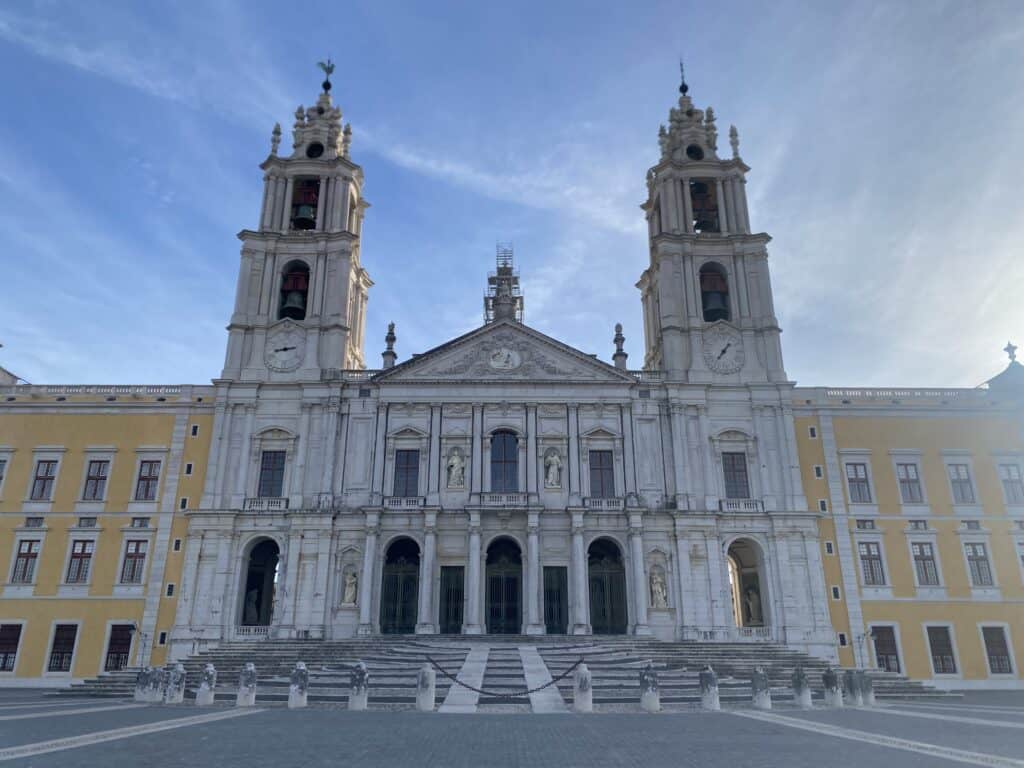
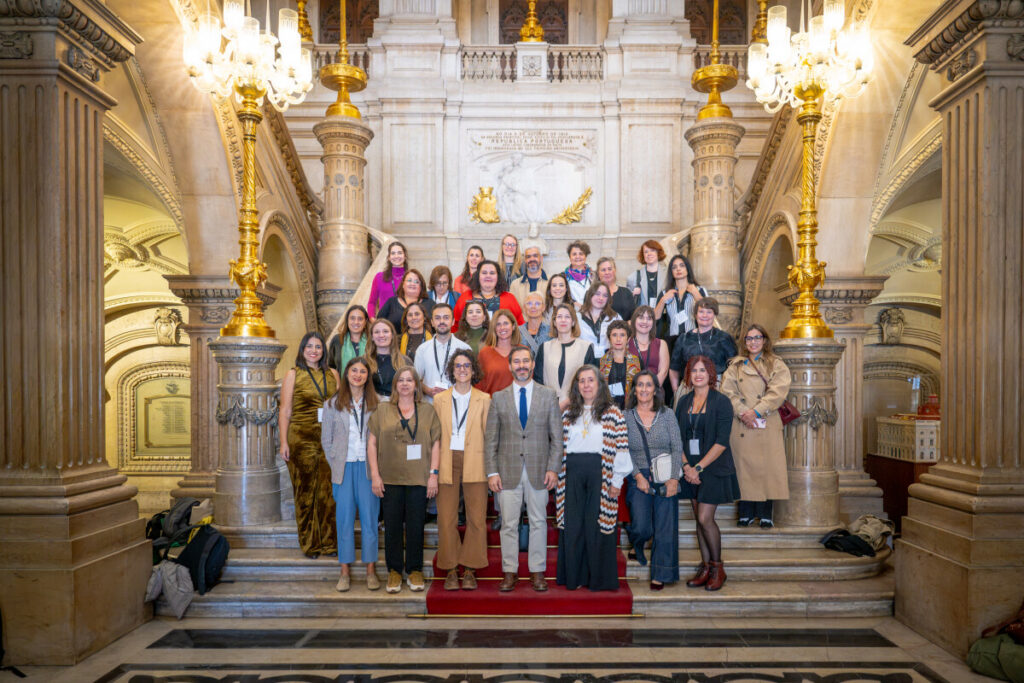
The first In Varietate Concordia Talk, “Europe, variations on a theme”, took place at the Calouste Gulbenkian Foundation in Lisbon and was livestreamed via the European Heritage Hub’s YouTube channel on 23 February 2026.
Bringing together leading voices from the Iberian cultural sphere, the event featured conductor, composer and musician Jordi Savall; baritone and founder of the Centre Européen de Musique Jorge Chaminé; fado singer and curator of the Ponta Delgada 2026 – Portuguese Capital of Culture project, Kátia Guerreiro. The discussion was moderated by Sneška Quaedvlieg-Mihailović, Secretary General of Europa Nostra and Project Leader of the European Heritage Hub.
Marking forty years after Portugal and Spain joined the European Union in 1986, and on the eve of the fourth year of Russia’s war of aggression against Ukraine, the speakers reflected on how Europe’s common musical heritage could inspire unity and peace at a time when democratic values are facing mounting resistance.

Opening reflections on unity, diversity, and cultural heritage
Opening the Talk, Sneška Quaedvlieg–Mihailović explained the mission of the In Varietate Concordia initiative, which has been developed in the frame of the EU-funded European Heritage Hub, and gave a special thanks to Europa Nostra’s partners in the project, Centro Nacional de Cultura, with the support from the Calouste Gulbenkian Foundation.
Maria Calado, President of the Centro Nacional de Cultura, underlined the importance of ensuring that civil society plays an increasingly active role in the ongoing and ever-evolving European project. She further expressed the ambition to transform the city of Lisbon into a hub and a beacon, highlighting the importance of cultural heritage — and culture more broadly — across the many dimensions of community development.
Alberto Santos, Secretary of State for Culture of Portugal, argued that music and other cultural traditions are almost always the result of unexpected encounters, from which important political lessons can be drawn: “Europe is a moving entity and a demanding construction that maintains its balance precisely because it accepts difference as a condition of its existence”. He praised the In Varietate Concordia Initiative for its mission to connect culture, heritage and democratic values through the creation of a public space for thought, negotiation, listening and compromise.
©️ Pedro Melim / Centro Nacional de Cultura
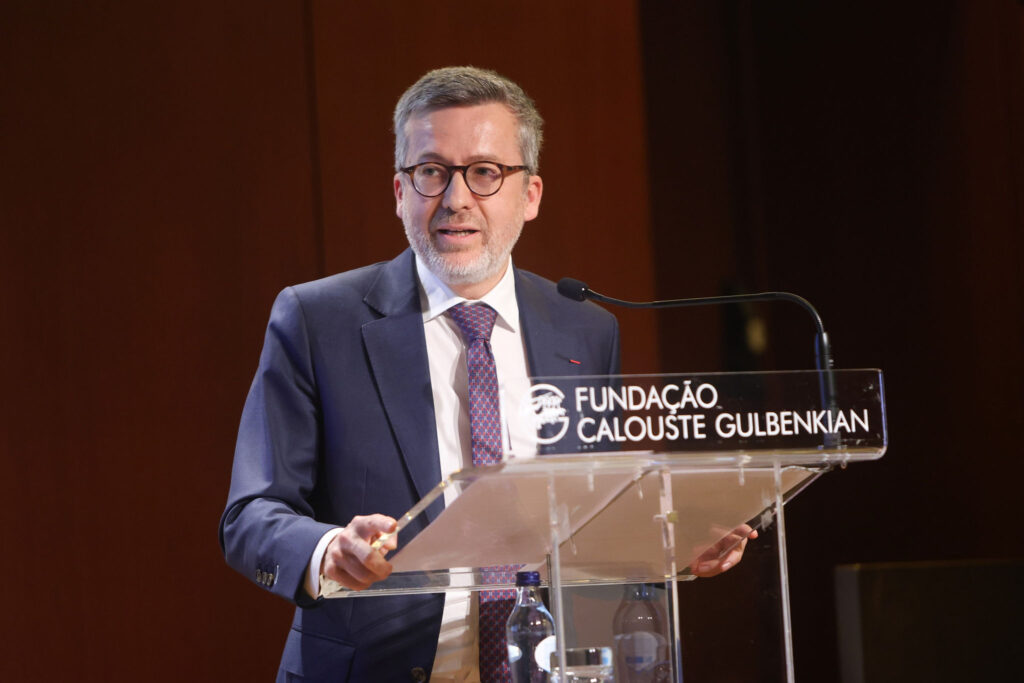
Mayor of Lisbon Carlos Moedas stressed the importance of revisiting the principle of In Varietate Concordia at a time when there is a pressing need to recover a shared sense of purpose, identity, and history. He noted that European civilisation has always been determined by diversity, emphasising that the challenge today lies in restoring meaning to that diversity, endowing it with renewed common substance, and reaffirming its sense of Union.
Music as memory, resistance and identity
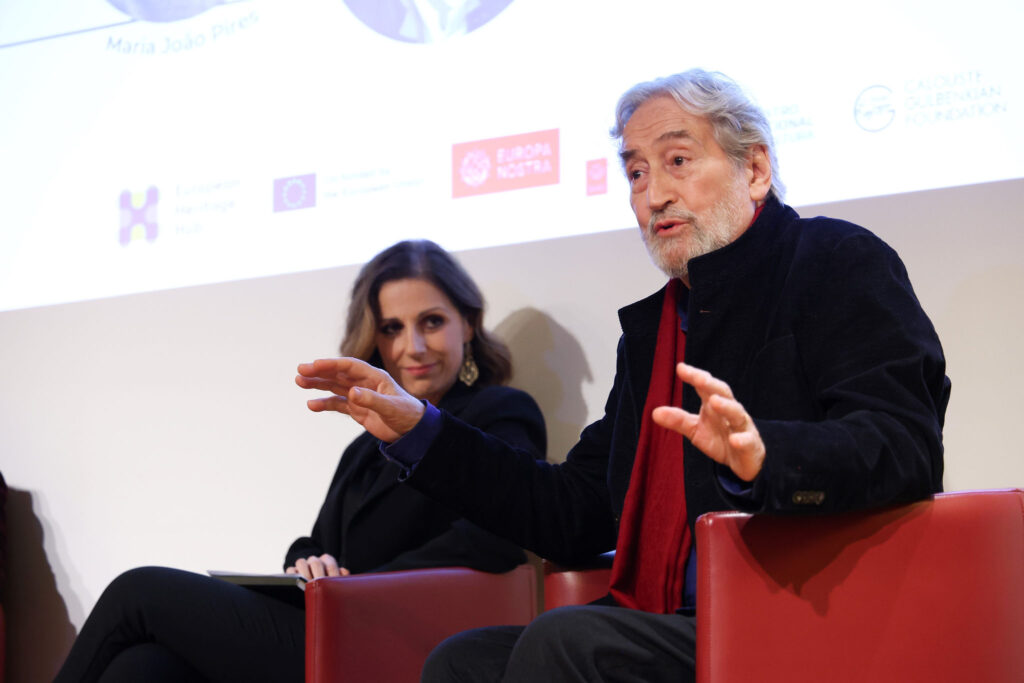
Jordi Savall warned that Europe risked losing a vital part of itself if it neglected its intangible musical heritage. “This language is today forgotten because the music exists only when the singer sings and the musicians play”, he said. “Unlike monuments or paintings, music lives only in performance. We don’t support our musical heritage, because it’s intangible. People with political responsibilities don’t know the value of a musical manuscript from an unknown composer. When the richness of patrimony isn’t recognised, we don’t know its value. To give it value, we have to support it”, he added.
©️ Pedro Melim / Centro Nacional de Cultura
Ringing an alarm bell, Savall cautioned against taking this heritage for granted. In his view, Europe still lacks a coherent cultural policy: “With the cultural exception, we don’t have a European cultural politic. The cultural exception means that every country does what they like”. The challenge, he suggested, is to move towards genuine equal opportunity in access to culture across the continent.
Jorge Chaminé placed music at the heart of European identity. “The cultural identity of Europe is music. The great philosophers always spoke about music as the core of a society”, he said, recalling how the Iberian Peninsula had long served as a European laboratory of exchanges and coexistence. “Music is the art of listening. Harmony is something that we have to construct – it is not something that is given to us. Listening to the other, paying attention before responding… That’s why education is so important”.
Looking at today’s geopolitical tensions, Savall was clear-eyed about the limits and the power of art. “Music cannot stop bombs, or barbarism”, he acknowledged in reference to Russia’s war of aggression against Ukraine. “But music is available to help put music into our hearts, because it speaks directly to our souls. Music can save us and help us against adversity.” Chaminé echoed this conviction, recalling Portugal under the long-lasting dictatorial regime: music was part of the resistance. “Regimes fall, but music stays”.
Renowned pianist Maria João Pires, who was set to be a panelist but could not join due to personal reasons, was still able to reach the audience via multiple videos from the first In Varietate Concordia podcast episode.
In one video clip shared with the audience, she underlined the importance of championing European values in the current climate: “I think that a Europe based on values is the true Europe, the Europe of the Renaissance, which can always return, which could always return. We must bring it back. And then, Europe begins to have, would begin to have true value”, she said.
Educating for future generations
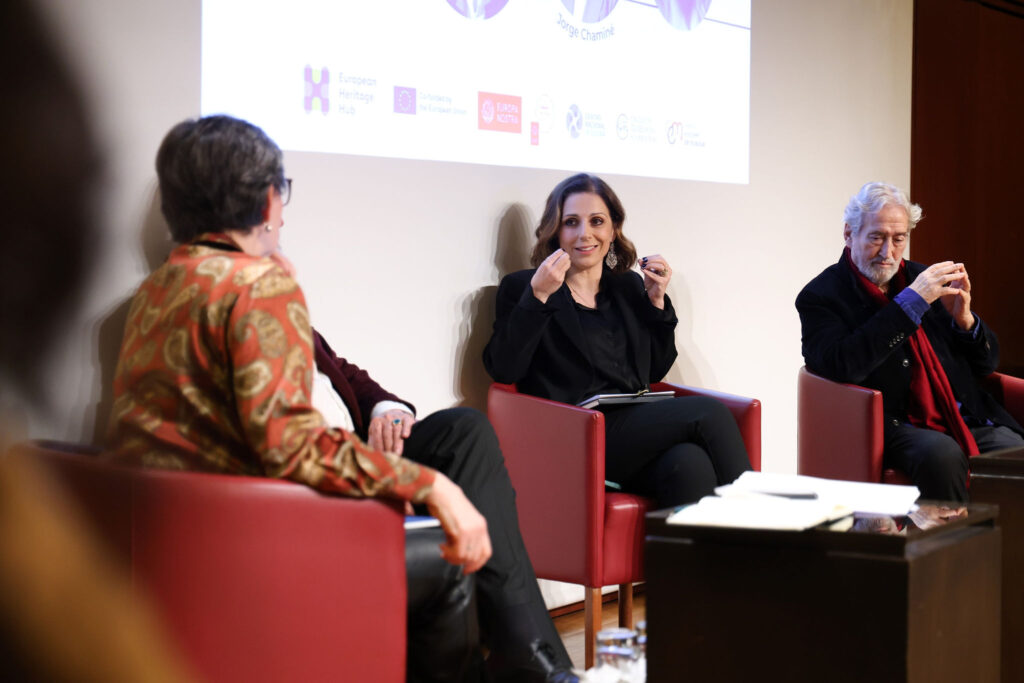
The panellists also underlined the importance of renewing traditions to keep them alive. Kátia Guerreiro reflected on the revival of fado, Portugal’s urban popular song, among younger generations. “Fado was passing through a difficult period because only old people were listening. But then a new generation came with a different way of showing what fado is”, she said. By “bringing a new way of singing and presenting themselves to the public”, artists could give “a little bit of sexiness to these values so they are preserved”.
©️ Pedro Melim / Centro Nacional de Cultura
Yet innovation has to go hand in hand with transmission. “We will lose values if we don’t educate the children to have them”, Guerreiro insisted. Culture, she argued, is not a luxury but “one of the main needs of human beings to develop as human beings that can give to others, that have critical thoughts, that can think for themselves – not just consume the entertainment that is in front of them”. Her hope was clear: “We can only have hope in the values of Europe if we educate children for and with culture.”
Chaminé agreed, describing Europe as “an unfinished symphony” that still has to be composed. For that, education systems needed to evolve beyond 19th-century models of producer and consumer. “The real education is the capacity of children – because they have it – for creativity”, he said, warning that in building the European Union, culture and education had not been given the central place they deserved.
Savall called for a return to the sources: learning music as a living language, sung and memorised, rooted in empathy. “Music without empathy doesn’t exist”, he reminded the audience. In times of internal and external challenges to Europe’s values, he and his fellow speakers argued that culture remained a last refuge of human dignity – and a foundation for rebuilding harmony.
More information
About In Varietate Concordia
This event is part of the In Varietate Concordia initiative, launched by the EU-funded European Heritage Hub and coordinated by Europa Nostra and the Centro Nacional de Cultura, with the support of the Calouste Gulbenkian Foundation. Inspired by the European Union’s motto ‘United in Diversity’, the initiative promotes live conversations, the production of a series of podcasts and the publication of opinion articles with the aim of stimulating critical thinking, fostering public debate and encouraging action in defence of Europe’s fundamental values such as democracy, justice, equality, solidarity and sustainability.
In Varietate Concordia continues the interdisciplinary legacy of the Helena Vaz da Silva European Prize for the Promotion of Cultural Heritage, bringing together leading figures in European culture, emerging voices and representatives of civil society. The inaugural Talk is also in partnership with European Heritage Hub consortium member Centre Européen de Musique.