Chalandri’s underground Roman aqueduct, long forgotten, is now at the heart of a cultural and ecological revival.
Where there is water, there is civilisation. Access to clean and safe water is what has allowed different societies throughout history to establish, thrive and prosper. Yet as human settlements expand, this taken-for-granted supply can become compromised. And this is where inventiveness comes into play: how might we reliably deliver water to communities far from sources, rivers or reservoirs?
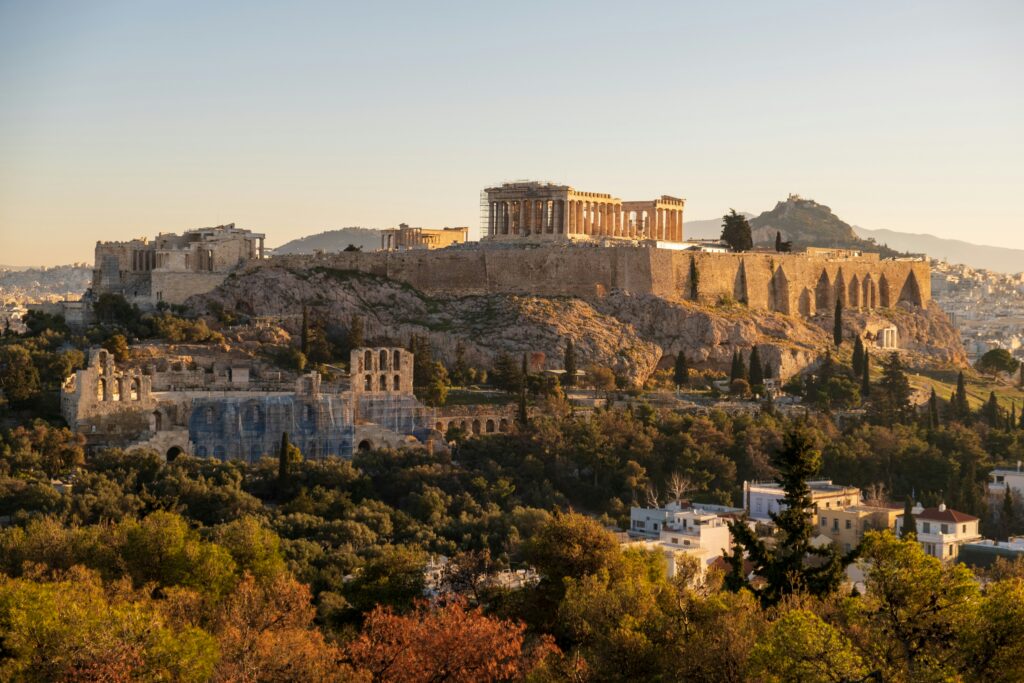
Two millennia ago, in what is now Attica, Greece, this question was already posed. The populous Athens, the nerve centre of the region, had already begun to face growing challenges in securing a reliable water supply. In response, early efforts were made to ensure constant and safe access to water. Years later, around 140 AD, the Roman Emperor Hadrian ordered the expansion and improvement of the water infrastructure in the area. This led to the construction of a largely aqueduct stretching 23 kilometres, channelling spring water from the slopes of Mount Parnitha to the settlements. Since then, these waters have never stopped flowing.
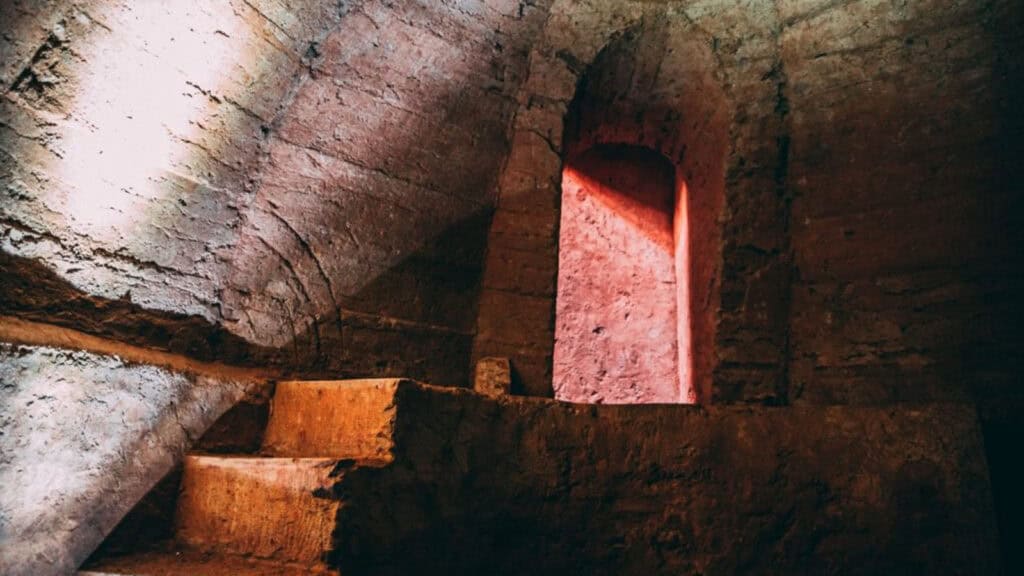
Remarkably, the Hadrian Aqueduct continued to operate at full capacity well into the twentieth century. Only as rapid urban growth and economic development demanded modern sanitation and supply networks did the aqueduct become redundant. Although its buried channels remained intact and the flow persisted, the carried waters ended unused into the sea. In a Mediterranean region now hit by longer, hotter summers and shrinking reserves, this represented an opportunity to rethink the region’s supply and needs in a sustainable way.
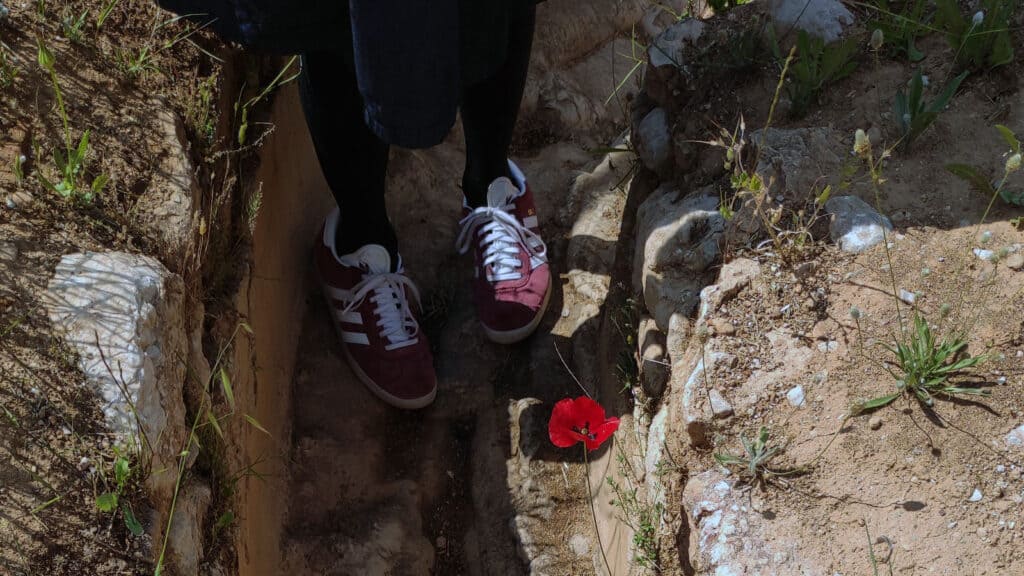
The water under our feet
The revival of the Hadrian Aqueduct did not start in boardrooms or ministries; it took root in Chalandri, a municipality in the north of Athens (home to about 90,000 residents and a commercial hub for the wider metropolis), where local authorities, heritage enthusiasts, community groups and engaged citizens have all come together as part of a collective effort to reimagine the aqueduct’s place in contemporary urban life.
This grassroots energy laid the foundation for the Cultural HIDRANT project, a cross-sectoral initiative that brought together the municipality of Chalandri, heritage professionals, engineers, artists and citizens under one shared goal: to make Hadrian’s Aqueduct visible and usable again. By bringing this infrastructure back, “we wanted to restore some of the natural habitat and increase the well-being of the local citizens,” says Christos Giovanopoulos, Project Manager of Cultural HIDRANT.
Funded by the ERDF/U.I.A. under the Culture and Cultural Heritage category, the project reimagines the aqueduct not just as a historical landmark but as a living cultural heritage, a vital water resource, and a catalyst for green and blue urban regeneration rather than a static monument. Through innovative, participatory governance, the project brings together physical elements (like the water network and the ancient infrastructure) with the stories, traditions and shared experiences that surround them, fostering a deeper connection between residents and their heritage.
Engineers and hydrologists studied how to channel the water for contemporary use, such as irrigating green spaces, while preserving the aqueduct’s integrity. “This was done in a very natural way, separating the heavy elements (soil, little stones) that come down, while the clean water flows above”, highlights Christos, as a way to show how ancient ideas can be adapted to contemporary needs.
More than an infrastructure project, Cultural HIDRANT became a way to reconnect with water, not just as a resource, but as a bearer of memory and identity. The presence of the aqueduct beneath the city became a metaphor: history flowing underfoot, waiting to be rediscovered.
From forgotten infrastructure to living heritage
Participatory design workshops with students, teachers and parents helped school communities engage with the project in meaningful ways, enabling them to contribute directly to the project’s outcomes and strengthen their connection to the space. Likewise, local residents participated in walks, workshops and public discussions to collectively define the aqueduct’s future.
A daunting task, since the aqueduct runs mostly underground. How can it be brought to the surface? “That was the first step: to make it known and give access to something that is hidden,” explains Christos. “We wanted to create a new historical landmark, to reboot it, to put it again on the historical map of Athenian monuments.” The idea was to do so both literally and metaphorically.
Beyond its practical use in ensuring a green-blue approach grounded in sustainability and access to reliable non-potable water sources, there is also a more physical dimension. To revive in the collective imagination something that has been forgotten for so long, a different approach is needed. Most residents were unaware of the aqueduct’s subterranean course, so through guided walks, school partnerships, workshops and storytelling sessions, the team gradually kindled public awareness, curiosity and pride.
Locals diving deeper
Citizens contributed oral histories to a digital archive (www.archalandri.gr) and took part in co-designing micro-interventions, such as shaded gathering points where water trickles into small pools, creating microclimates amid asphalt streets. These interventions were part of a broader effort to create green, walkable corridors across the city as an alternative to cars, and to mitigate the effects of urban heat islands. The group’s work was presented during the local HIDRANT Festival, offering an opportunity to further engage the community and showcase the value of collective action.
The digital game, Drop a Message, was even launched, inviting users to write messages that appear at different wells along the aqueduct’s route. It also includes a tool that allows you to check whether the aqueduct runs beneath your home, allowing users (especially, children) to live an immersive experience.
Challenges and Lessons Learned
Reviving a two-thousand-year-old structure in the middle of a metropolitan region is no small task. The aqueduct itself lies under a dense, modern urban fabric. Access points are limited, and parts of the infrastructure are owned or managed by different public and private stakeholders.
Although the project was led by the Municipality of Chalandri, coordinating with the Athens and Piraeus water company proved challenging. The participatory nature of the project also added complexity. Initial surveys underestimated local demand for aqueduct water, but once the municipality organised community meetings, interest soared, prompting the water company to revise and expand the planned network capacity.
A watermark for other cities
Cultural HIDRANT’s success has implications beyond Athens. Across Europe, there are countless examples of forgotten or underused historical infrastructure (canals, aqueducts, mills, irrigation channels) that could be reactivated through community-led approaches.
As Lead Partner in the Hydro-Heritage cities URBACT Innovation Transfer Network, the municipality of Chalandri is now sharing the knowledge and methodologies developed through the project with other European cities. The aim is to inspire similar heritage-led approaches to water management and community participation across the continent in order to reinforce their potential for urban sustainability.
By blending technical innovation with cultural storytelling and participatory design, the project offers a blueprint for how living heritage can serve as a driver for climate adaptation, urban sustainability and civic engagement. It is not just about preserving the past, but about shaping the future with the tools that history offers us.
Back to the source
The waters of the Hadrian Aqueduct still flow, just as they did nearly two thousand years ago. But today, their course is not only physical – it is symbolic, connecting generations through a shared recognition of the value of heritage, the importance of sustainability, and the power of community. “People feel that they are a part of a larger take – a larger effort”, showcases Christos.
In Chalandri, and in the region of Attica, where summers grow longer and drier, the aqueduct reminds us that the answers to some of our most urgent challenges may lie beneath our feet. As we reimagine how cities function and how citizens interact with the environment, Hadrian’s Aqueduct flows endlessly, nurturing and refreshing those who choose to sip at its story.
The Cultural H.ID.RA.N.T. Project
Performance at the Cultural Hidrant Festival 2021
Image credits: © EYDAP archive