On Monday, 30 June 2025, an international webinar took place focusing on the mapping of the non-governmental heritage sector in Central and Eastern Europe. During the event, the findings of a pioneering study were presented, published in the report titled “Mapping of the Central and Eastern European non-governmental heritage sector: Report.” The event, which was attended by approximately 70 participants from diverse backgrounds – including scholars, practitioner-experts, as well as representatives of non-governmental organisations and European institutions – provided an excellent platform for exchanging experiences and reflections on the report’s topic.
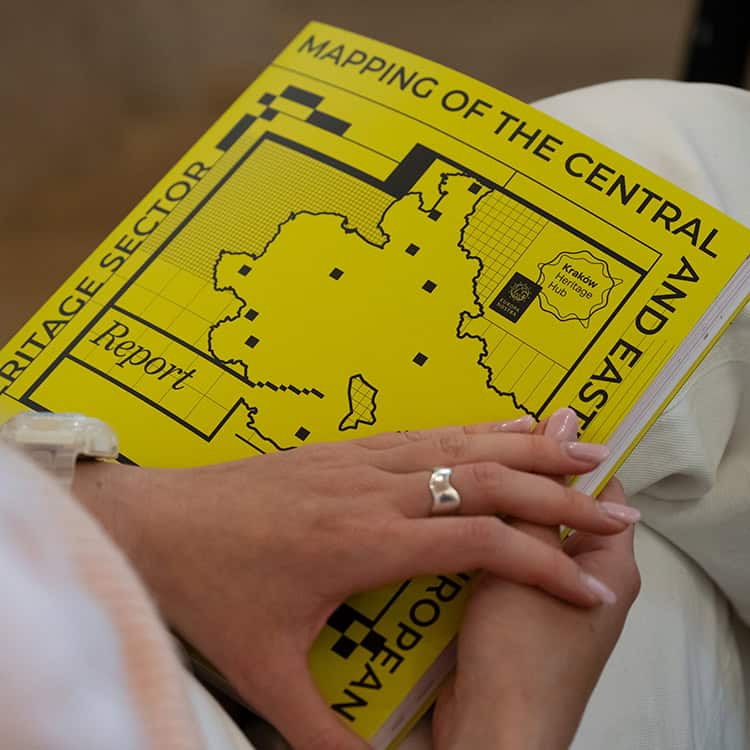
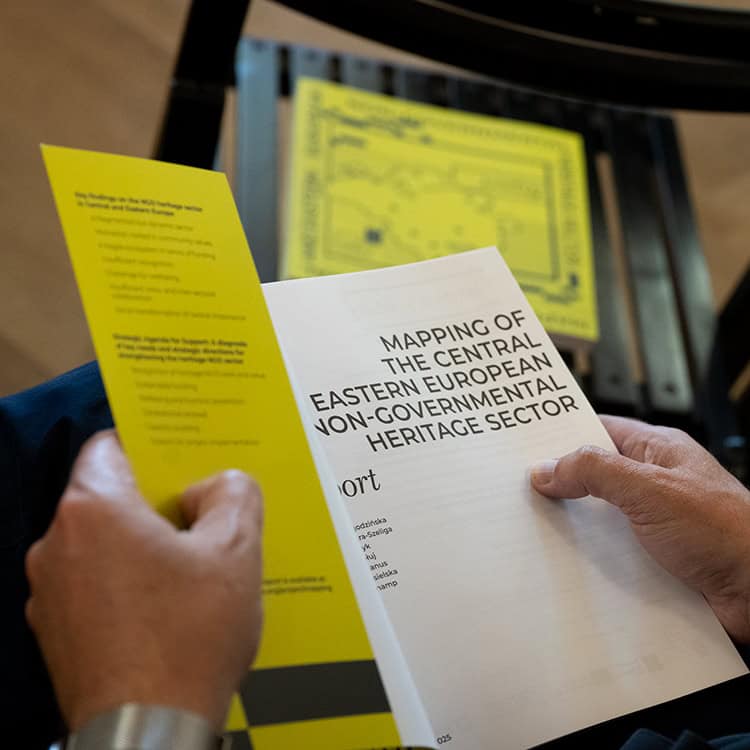
Photo credits: © Europa Nostra Heritage Hub in Kraków
In the first part of the event, moderated by the co-authors of the report, Dr Katarzyna Jagodzińska, Head of Europa Nostra Heritage Hub in Kraków, her deputy, Dr Joanna Senetra-Szeliga, and Sneška Quaedvlieg-Mihailovic, Secretary General of Europa Nostra, addressed the audience. She expressed appreciation for the study’s results, emphasising their value in identifying challenges faced by the sector. She highlighted key sectoral values and the need for further mapping, aimed at increasing its influence on policy at both European and national levels, as well as supporting partnerships between institutions and NGOs.
Next, Georg Häusler, Director for Culture, Creativity and Sport, DG EAC of European Commission, delivered a speech. He stressed the importance of data and mapping for creating effective public policies. He pointed out that understanding the sector’s structure and possessing current, reliable information are essential for developing harmonised support mechanisms and strategic development initiatives.
Finally, Professor Jacek Purchla, Vice President of Europa Nostra, underscored the role of civil society and the potential of individuals engaged in the sector’s activities. He emphasised the importance of establishing network structures, local centres, and partnerships that can support the development of organisations within the region. He also noted that the sector must adapt to new challenges, such as digital and ecological transformations, to respond effectively to current needs.
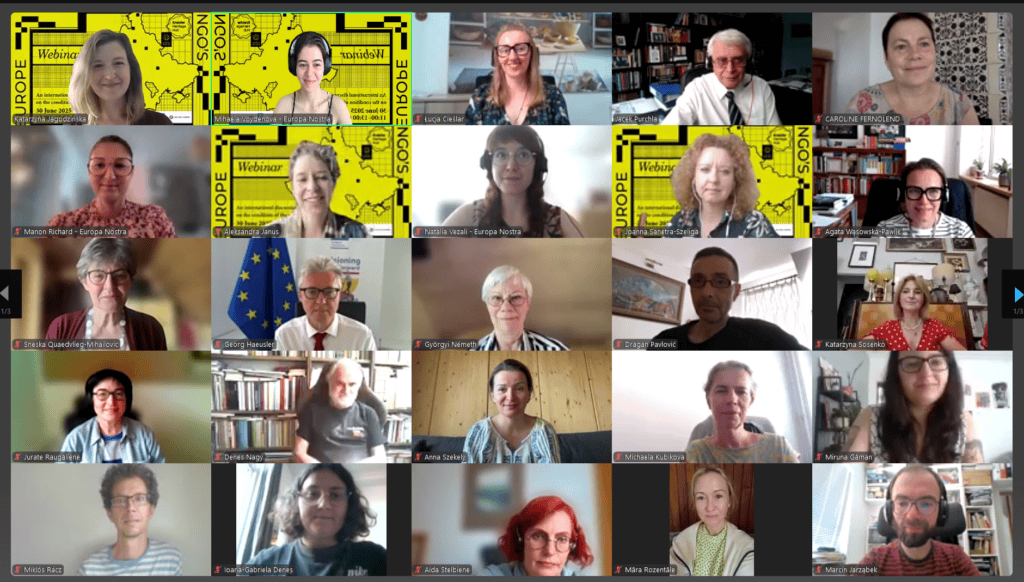
The second part of the event involved the presentation of the report prepared by a team of researchers from the Europa Nostra Heritage Hub in Kraków and Centrum Cyfrowe in Warsaw. Dr Katarzyna Jagodzińska, Dr Joanna Senetra-Szeliga, and Dr Aleksandra Janus summarised the key findings of the research. The document addresses the urgent need to fill gaps in knowledge regarding the scale, characteristics, and challenges of the non-governmental sector involved in heritage, estimated at around 33,500 entities in the region. The findings indicate that although the sector is rather fragmented, it operates dynamically, based on deeply rooted social values and a sense of mission. Insufficient recognition from authorities and society, coupled with financial difficulties, are primary reasons for professional burnout among sector employees and a lower sense of satisfaction with their work. The interest of young people and generational renewal within organisations is also cited as a key challenge for NGOs’ operations.
For the sector to function effectively and efficiently, a necessary change involves both a shift in perceptions of NGOs and greater recognition of their efforts, as well as reforms in financial and organisational support. The presented conclusions, alongside the sector’s condition and challenges in Central and Eastern Europe, sparked a discussion involving Georg Häusler, Agata Wąsowska-Pawlik, a board member of Europa Nostra and Director of the International Cultural Centre in Kraków, and representatives of four featured in the report: Łucja Cieślar, Vice-President of the Serfenta Association in Cieszyn (Poland), Katarzyna Sosenko, President of the Sosenko Family Collections Foundation – Toy Museum in Kraków (Poland), Caroline Fernolend, President of the Mihai Eminescu Trust (Romania), Anna Szekely, Vide-President and Executive Director of the Tășuleasa Social – Via Transilvanica (Romania), and Stsiapan Stureika from the European University of Humanities in Vilnius, who collaborated on data collection and empirical research regarding Belarus.
All participants emphasised the crucial role of NGOs in protecting, promoting, and building cultural heritage across Central and Eastern Europe.
“The NGO sector is key to shaping social policies and heritage preservation, but it requires stable funding sources and support in the process of generational renewal,” noted Agata Wąsowska-Pawlik.
“We have great diversity and many variations within the sector, which is both its asset and strength. However, when it comes to being recognised, heard, and listened to, the fact that the sector is highly dispersed and heterogeneous can sometimes work against us. I have to face this. Nevertheless, I believe we should appreciate the richness of this diversity, while also supporting organisations in gaining a stronger voice and greater influence in policies related to cultural heritage,” added Georg Häusler.
Dr Stsiapan Stureika highlighted the role of cultural heritage in building social bonds and national identity, even under non-democratic regimes. He emphasised that in Belarus, heritage functions as a network that unites communities and allows preserve their own identity despite challenging political conditions. He pointed out that heritage acts as a network which fosters social cohesion and helps maintain cultural identity even in difficult governance contexts.
One potential way to address issues such as financial instability, burnout, or lack of secure employment, though not a complete solution, is the commercialisation of heritage activities.
During the discussion, Łucja Cieślar from the Serfenta Association explained: “We believe heritage is extremely valuable and an important part of human life. … Despite the political situation causing a decline in cultural funding year by year, which poses a serious challenge to our entire sector, the solution lies in connecting with sources of financial support, that is, the market. Therefore, our association has opted for the path of economicisation and monetisation of intangible heritage services.”
Experts agreed that the presented report, “Mapping of the Central and Eastern European non-governmental heritage sector,” is an important step forward in understanding the scope, characteristics, and challenges of this environment. Its analysis will not only lead to a better understanding of NGOs involved in heritage protection, promotion, and development across Central and Eastern Europe, but will also pave the way for recommendations and strategic actions aimed at strengthening the sector, improving financial and organisational conditions, and increasing its influence on policymakers.
The webinar concluded with a call for continued, intensive cooperation among various stakeholders – European institutions, national and local authorities, communities, and the NGO sector, to collectively work towards the preservation and development of cultural heritage. Only through synergy can future generations truly hear the voices of the past.
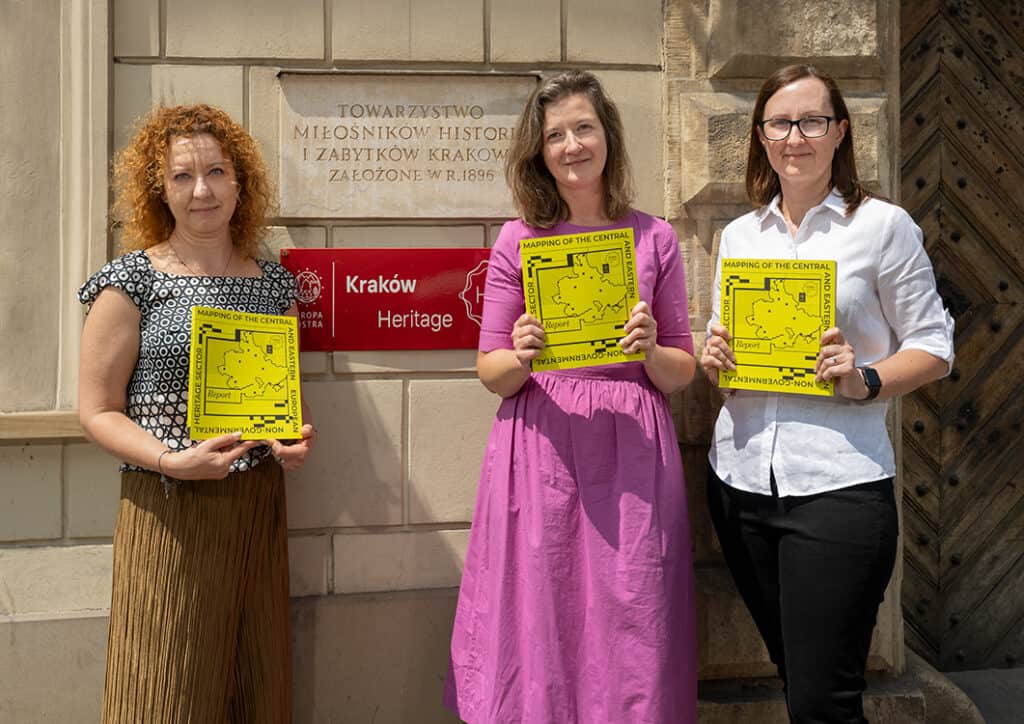
Photo credits: © Europa Nostra Heritage Hub in Kraków