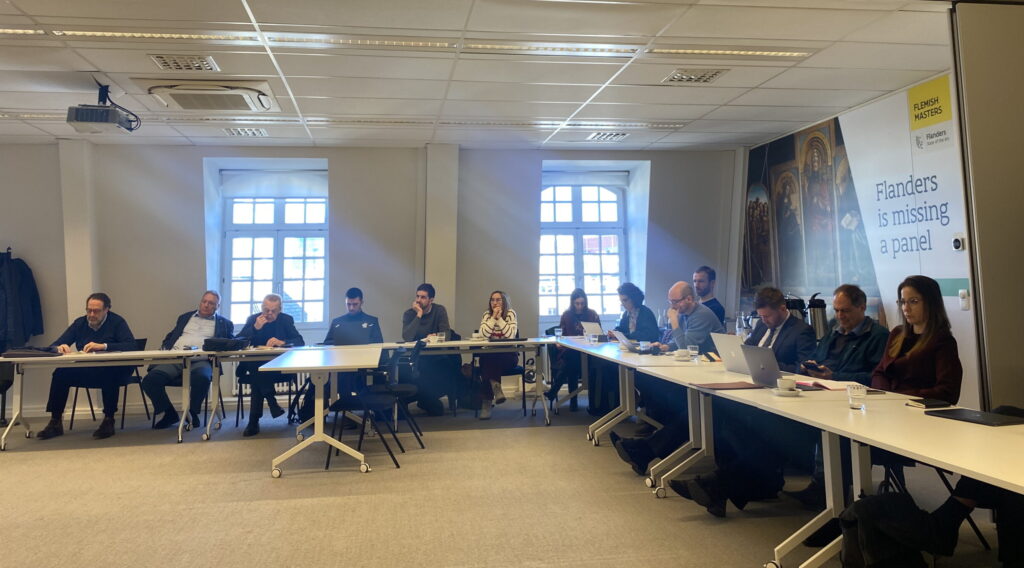
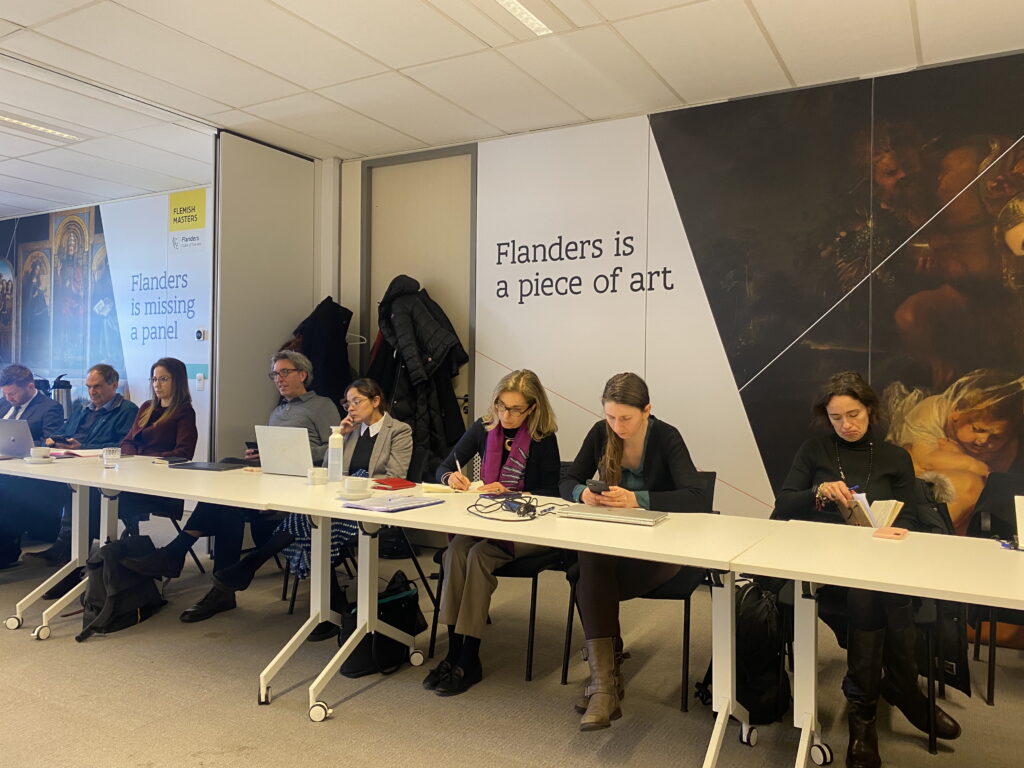
The European Heritage Alliance and the European Heritage Hub met in Brussels on 4 February 2026 for a joint in‑person meeting hosted by the European Travel Commission (ETC). For the first time, members of the Alliance and partners of the Hub convened, marking an important step towards closer strategic cooperation and renewed advocacy ambitions of the Hub in its preparatory phase.
Iulia Niculica, Head of Administration of ETC, welcomed participants on behalf of the organisation, highlighting the long‑standing collaboration between ETC and the heritage sector, notably in the field of sustainable cultural tourism.
Opening the meeting, Sneška Quaedvlieg‑Mihailović, Secretary General of Europa Nostra and Project Leader of the European Heritage Hub, underlined the political significance of bringing members of the Alliance and the Hub together at a moment when cultural heritage is increasingly recognised as a strategic asset for Europe.
The next phase
A central focus of the meeting was the presentation of the European Heritage Hub’s Preparatory Action by Manon Richard, Project Manager of the Hub. Building on the achievements of the Pilot Phase (2023–2025), she outlined how the Hub is evolving into a more strategic, advocacy‑oriented instrument aligned with the four directions and flagship actions of the Culture Compass recently published by the European Commission and discussions on the next EUlong term budget, the Multiannual Financial Framework (MFF). The Preparatory Action is set to strengthen the Hub’s role in advocacy, youth engagement, and support for local and regional actors, while expanding its network of City Hubs across the EU and neighbouring countries.
Advocacy priorities were further developed through the presentation of the results of a dedicated survey led by Vanessa Fraga Prol, Advocacy and Partnerships Manager at Europa Nostra. Based on input from a broad range of heritage organisations, including from members of the Hub and Alliance, three priority areas emerged: cultural heritage governance and communities; social inclusion, cohesion and values; and international cultural relations and enlargement. The discussion highlighted the shared ambition to move towards more evidence‑based, coordinated and impactful advocacy targeting EU institutions, Member States and local authorities. Additional topics, including intangible cultural heritage (music/crafts), sustainable tourism, culture led climate action as well as the digital transformation and AI, will also be possible themes to be addressed collaboratively by members of the Hub consortium and the Alliance.
A rich exchange followed among Alliance and Hub members, with contributions from representatives of the European Commission and UNESCO. Angela Atzori, Team Leader for Cultural Heritage at DG EAC, welcomed the dialogue and stressed the relevance of heritage to key EU priorities, including youth, cohesion, competitiveness, resilience and international relations. Participants underlined the importance of positioning cultural heritage more strongly within EU strategies on digital transformation and artificial intelligence, skills and crafts, climate action, music and intangible heritage, as well as in the context of enlargement and geopolitical challenges.
From planning to action
The meeting also marked a shift to planning and action. Participants agreed to establish thematic advocacy working groups, notably on digital heritage and AI, music and sound heritage, governance and the role of cities, and skills and crafts. These groups will help translate research and field experience into concrete policy recommendation messages and advocacy actions, reinforcing the Alliance as a platform of collective intelligence for the Hub.
In his closing remarks, Hermann Parzinger, Executive President of Europa Nostra and Chair of the European Heritage Hub Advisory Council, emphasised the strength of the combined Alliance-Hub ecosystem and the need for the heritage sector to speak with one voice. He highlighted advocacy towards EU institutions and Members of the European Parliament as a key next step to ensure that cultural heritage is firmly anchored in Europe’s future policies and budget.
The meeting concluded with a shared commitment to strengthen cooperation between the European Heritage Alliance and the European Heritage Hub, finalise a joint Advocacy Plan, activate thematic working groups and continue engaging closely with EU institutions as well as Member States. Together, participants reaffirmed their ambition to position cultural heritage as a fundamental pillar of Europe’s democratic, sustainable and resilient future.