Once a hub of coal and steam, Gasverket is now a flagship of sustainable urban renewal that blends Stockholm’s industrial past with bold ideas for the future.
Switching on a light is something we barely think about today, but 150 years ago, it felt almost like magic. As the Industrial Revolution spread across Europe, millions of people left behind the dim glow of wax candles and tallow lamps and began to enjoy light that was brighter and easier to rely on. This new light didn’t stay inside homes either: streets were soon lined with iron lamp posts, each one crowned with tiny points of gaslight that pushed back the dark.
But how was the darkness kept away? The answer was town gas, a fossil fuel made from coal (and later naphtha), produced in vast industrial plants on the edge of cities to ensure constant and direct supply to households. This gas, which also kept homes warm through harsh winters, gradually gave way to electricity, natural gas and cleaner and more sustainable energy resources.
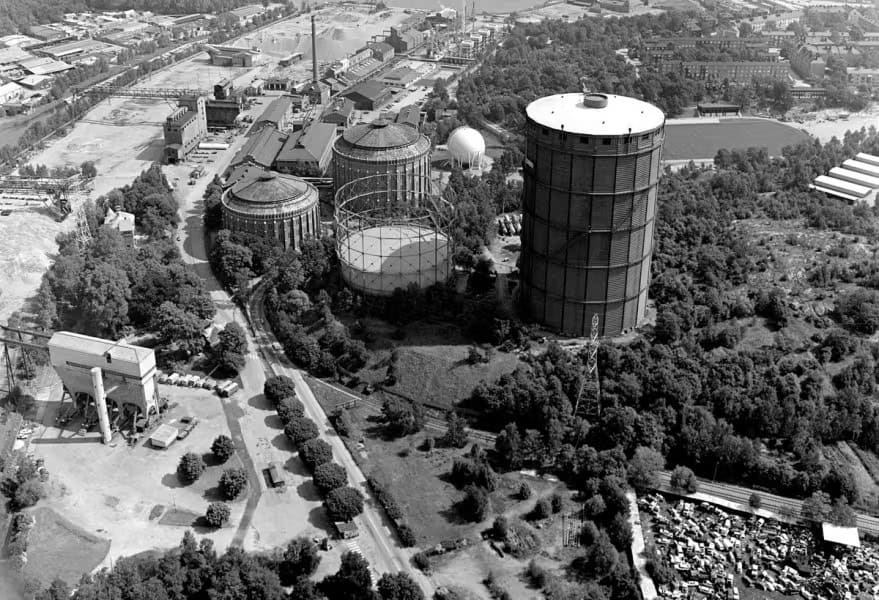
The gas production centres that once burned nonstop slowly fell silent, leaving behind massive structures of brick, concrete and steel. As cities grew, these old sites have found themselves surrounded by new urban life. That’s exactly the case with Gasverket, a unique architectural complex in Stockholm that now looks to the future without forgetting its past.
An industrial landmark rediscovered
Tucked inside Stockholm’s Royal Seaport, Gasverket is more than just an old industrial site. Production there began in 1893 and continued for more than a century, powering streetlights, homes and heating systems for thousands of Stockholmers. At its peak, the site rumbled with steam engines, coal deliveries and constant work shifts. “We have around 20 buildings left, from small buildings that held steam machinery to bigger ones where we stored the gas”, said Örjan Lönngren, Energy and Climate Advisor at Stockholm’s Environment and Health Department.
Most of these buildings, each which had different purposes for the gas production process, were designed by Ferdinand Boberg, a prominent architect and designer in Sweden between the 19th and 20th centuries. Red brick, symmetry and subtle ornamentation are the most visible features, as well as the big windows to allow as much natural light as possible inside. Later, in the 1970s, a few more structures were added to the complex.
When production ended at Gasverket in 2010, the City of Stockholm took full control of the site. Very quickly, its historical and cultural value rose to the top of the agenda. The site caught the attention of national heritage authorities, who saw its genuine value and potential. “They inspected the area and said these are very unique buildings”, Örjan explained. Sweden’s strict heritage laws protect Gasverket with the highest classification, meaning its facades, roofs and external details must stay almost exactly as they were when the last flames went out.
“The complex should look just as it did when production stopped. But inside, it was mostly empty, so that gave us freedom to do something new”, Örjan said, with a smile on his face.
Past and present under one roof
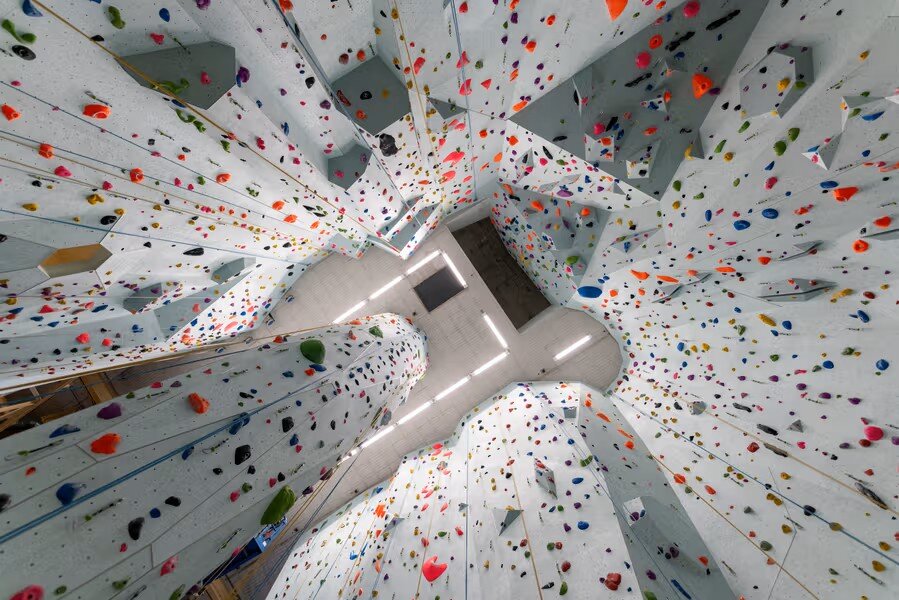
The ambitious plan to reconvert Gasverket started to take shape over 10 years ago. The buildings were and had to be there, so new functions needed to be found. According to Örjan and his team, “We wanted them to be for experiences, not offices. One of the gas holders will be a theatre for 2,000 people, with a restaurant on top. Another will be a hotel. Each building gets its own story.”
Some spaces are educational: a communications school now stands not far from an elementary school, where two extra buildings have been added. Others have been reborn, such as the regeneration house, which is now the city’s public transport museum – preserving stories of movement and change. And the gas metering house has become a climbing centre, a playful contrast to the heavy industry that once dominated here. “There’s even a bakery!” Örjan added.
Blending heritage and sustainability
Stockholm has set an ambitious goal: to become climate neutral, fossil fuel-free and climate positive by 2030. Reimagining Gasverket is part of that promise, but working with old industrial buildings under strict heritage controls is never simple.
“Twenty years before the gas stopped, we knew we couldn’t keep producing gas from fossil fuel”, Örjan said. The site’s original production stopped partly because Stockholm decided to switch entirely to biogas and greener systems, and also because its demand was decreasing. Decades of generating town gas were left behind, but the gasworks area would soon see a brighter, cleaner future.
However, meeting modern energy standards was a challenge. The brick walls could not be insulated due to their heritage protected status, so the city added insulation under the buildings instead. New ventilation and heating systems cut emissions, while careful monitoring ensures real progress.
“We thought a lot about how to reach our energy targets”, Örjan said. “Some of the old buildings now nearly meet the national code for new buildings, which is amazing given the restrictions”.
A public place, not a closed museum
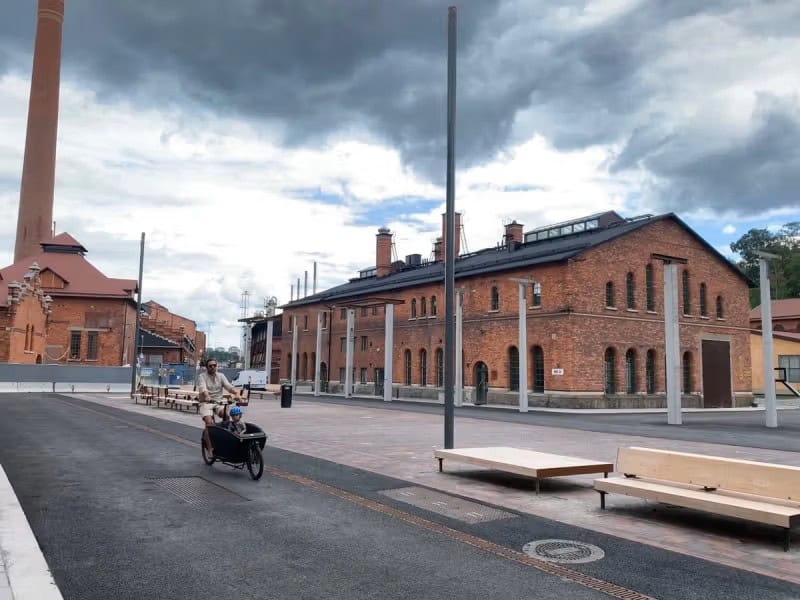
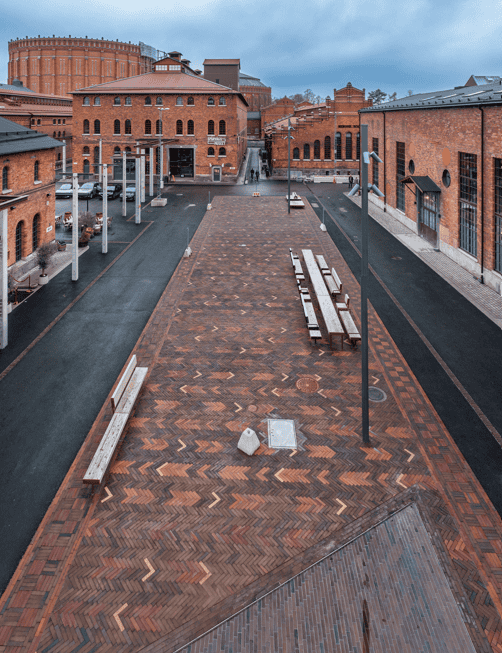
Unlike some heritage sites that freeze buildings in time for visitors to view from behind ropes, Gasverket’s revival is about incorporating everyday life. A network of streets, alleys and squares has been kept mostly intact. Boberg Square (named after the site’s original architect), paved in warm clay bricks that echo the old façades, sits at the centre. It’s become a crossroads where past and present meet.
An activity park nearby was designed with local young people to ensure it truly serves its neighbours. And while adding green zones is limited because of preservation matters, planners turned an old, elevated gas pipe into a 400-metre-long green trellis, now wrapped in climbing plants. “We couldn’t plant trees everywhere, so we used what we had”, Örjan said. “It’s a way to keep the industrial look and still bring life and green into the area”.
To keep the site open and safe, the city chose to ban cars from surface roads. Parking is hidden underground in old storage caverns where fuel was once kept. The open yards are now spaces for people to walk and rest, and where children can run between school and home.
Keeping the soul, sharing the lessons
Half of Gasverket’s buildings are already alive with new uses. The rest will open gradually as new partners bring fresh ideas and investments to the project. The hope is that by 2028, the entire area will be active – and not just for locals, but as a cultural magnet for the whole city.
“When we opened the site for a public day, thousands of people came”, Örjan explained proudly. “Nobody had been inside before and people were curious. It’s rare to see so much positive reaction in Stockholm”.
The project’s lessons are spreading too. For Stockholm, Gasverket has become a testbed for new ways to handle old spaces. Early collaboration, multiple partnerships, and inviting students and experts to dream boldly, have now shaped other regeneration plans across the city and beyond.
How can other cities with similar challenges start to act? “You have to talk early, ask different people, try crazy ideas, and see what works. That’s how you find the best way forward, and other cities are watching how we do it”, Örjan suggests.
As Stockholm grows and changes, this patch of red brick and steel shows that heritage keeps the past alive by preservation, but also adaptation, creativity and collective rethinking. Inside Gasverket’s old gas houses and alleys, a new light is flickering – not from burning coal, but from people coming together to reimagine what a city can be.
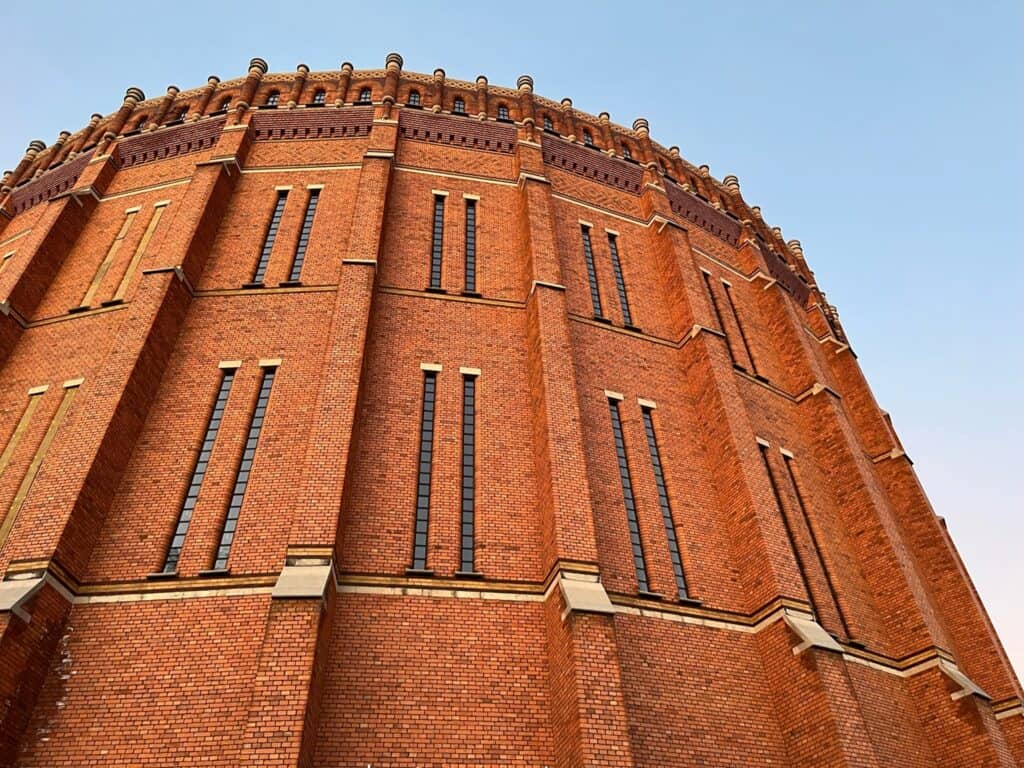
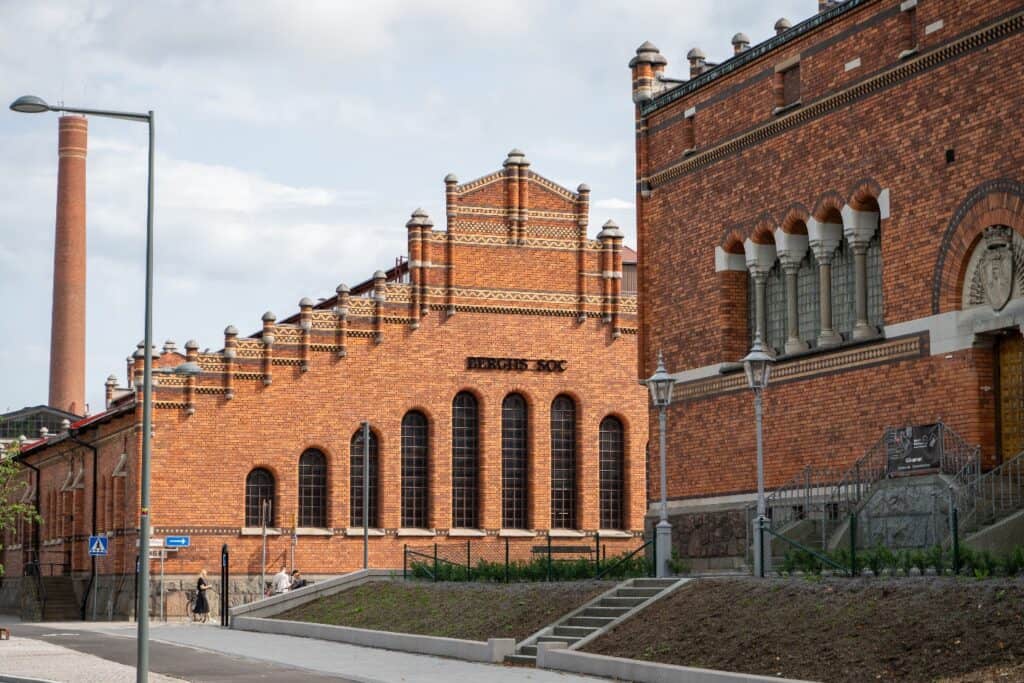
Image credits: © City of Stockholm