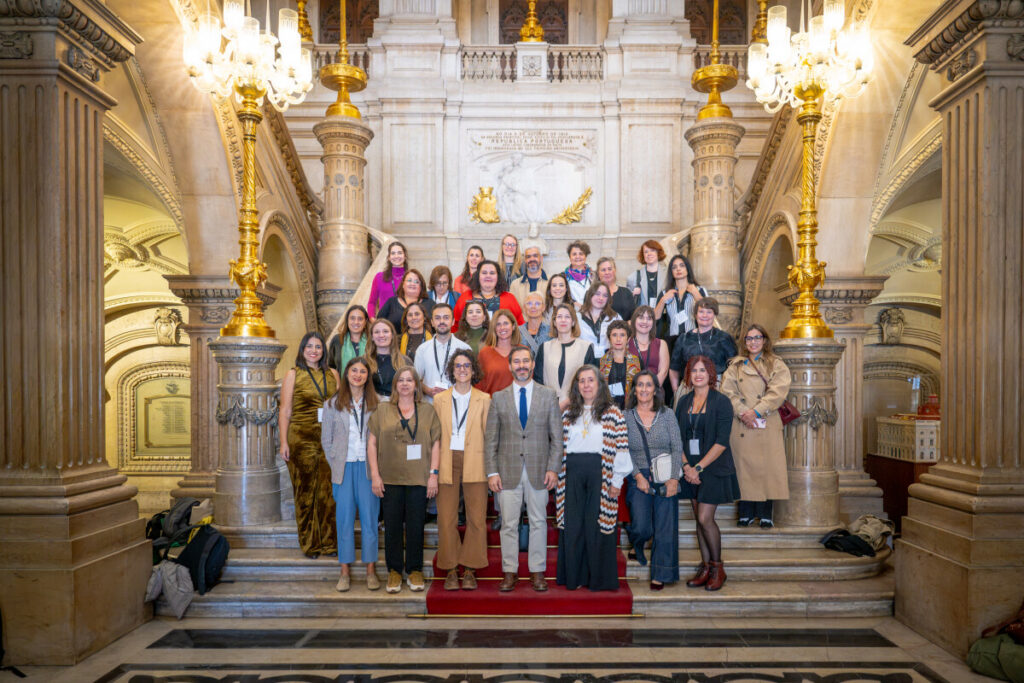
The fourth European Heritage Hub Educational Study Visit was organised at Complutense University Madrid, at the Library Hall of the Museo del Traje on 18 June 2025, in cooperation with Hub partners KU Leuven — a member of the Una Europa Alliance — and the European Students’ Association for Cultural Heritage (ESACH). Over 20 students and young heritage professionals were present at the event, marking yet another successful educational visit at Una Europa universities within the scope of the European Heritage Hub pilot project. The study visits present an opportunity for younger heritage practitioners to connect with professionals for a meaningful education and networking experience.
Professor Isabel García Fernández, Vice-Rector of Culture, Sports and University Outreach at Complutense University, opened the event with a welcome speech underlining the significance of the university’s role in promoting cultural heritage through academic programmes, community engagement, and international cooperation. In her remarks, she emphasised the importance of fostering collaboration between institutions and young professionals to ensure the future of heritage protection in Europe.
The programme continued with a presentation of the European Heritage Hub pilot project and its youth-oriented activities, delivered by Jasna Popović, ESACH Secretary. She provided an overview of the project’s objectives and main achievements over the past two years of implementation, with a focus on opportunities created for students and emerging heritage professionals. Joshua Davis, from KU Leuven, followed with a more technical presentation that showcased the Hub’s Policy Monitor — a tool developed by the consortium to support researchers and practitioners in analysing policies linked to the triple transformation (green, digital and social). This presentation sparked interest among the audience, particularly regarding how such tools can be used in academic and field research.
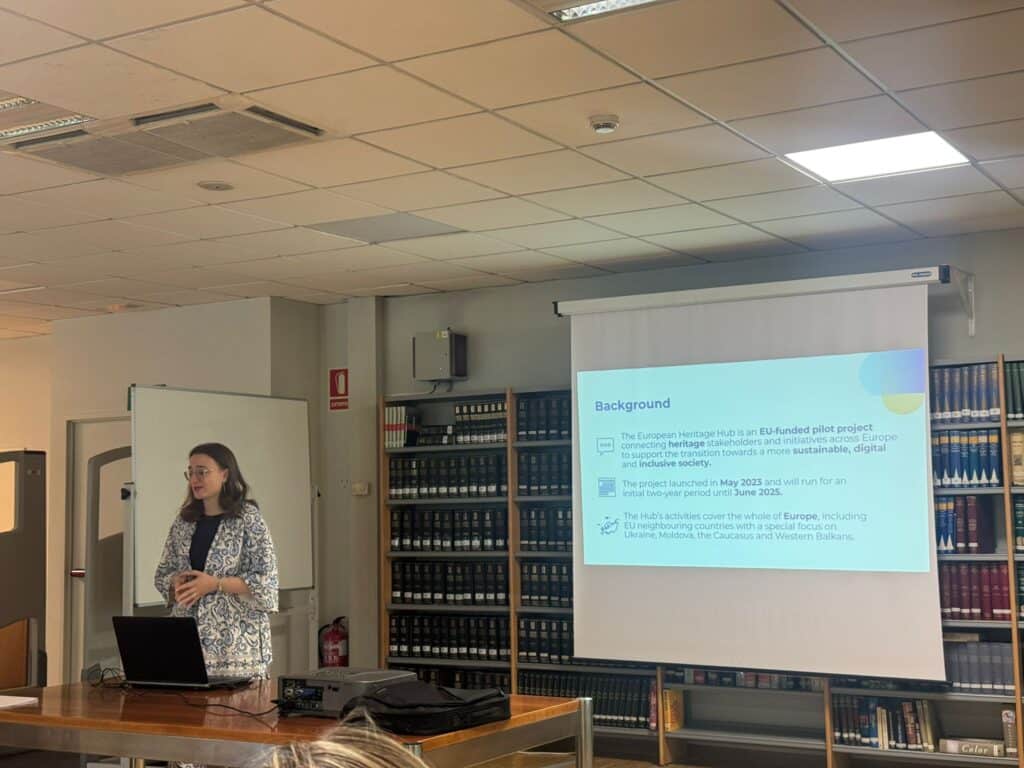
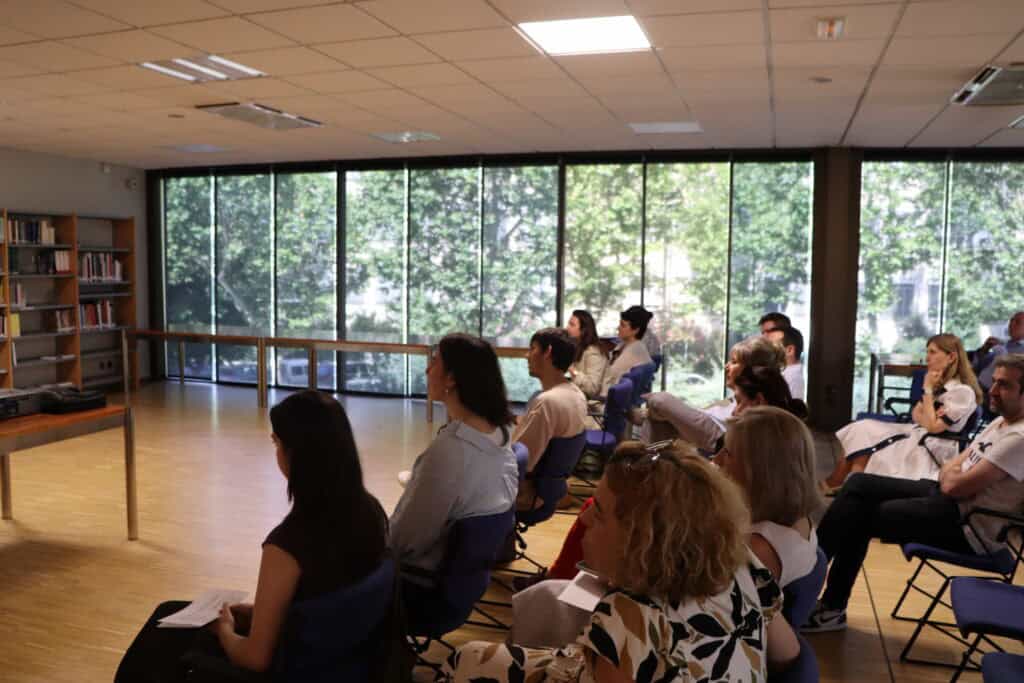
Photo credits: © Complutense University Madrid
Participants then learned about various initiatives on cultural heritage taking place within Complutense University. Ana Galán-Pérez, Assistant Professor, introduced the session, followed by a series of short presentations from student interns working in different university structures. Maya Caravella presented the activities of the Complutense Publishing House, while Marina Sastre and Víctor Martín shared their experience working in the Communications Department. Marina Callejo and Marta Collado spoke about the Visit Programme, a university-led initiative that opens the campus’s heritage to a wider public, and Marina Pelegrín described her work within the university’s Heritage Unit. Their joint contribution reflected the diverse ways students can actively participate in shaping the university’s cultural offer and preserving its heritage.
After a short break and networking session, the group was addressed by Juncal González Soriano, Rector’s Delegate for the Urban Development Consortium and University Campus. She gave an insightful presentation on the Centenary University City Consortium and the candidacy of the Complutense University Campus for the European Heritage Label, stressing the value of the campus as a living heritage site and a platform for educational and cultural innovation.
The programme concluded with two guided tours of significant heritage-related sites. First, Linarejos Moreno Teva, Vice-Dean for Cultural Affairs, Heritage and Communication, guided the participants through the temporary exhibition HAMBRE. La Cuestión Palpitante (HUNGER. The Burning Issue) at the Centro de Arte Complutense, which offered a powerful artistic reflection on the theme of hunger and its social, historical, and political dimensions. The second visit took place at the Museum of Hispanic Pharmacy, located in the historic Faculty of Pharmacy. Led by curator Alejandra Gómez Martín, the tour provided an overview of the museum’s collection and its role in preserving the scientific and cultural heritage of pharmaceutical practice in Spain.
Throughout the day, participants engaged in lively discussions and exchanges, reflecting on the different perspectives and considered how these approaches to heritage management, interpretation and communication could be applied in their own contexts. The Madrid Study Visit demonstrated the relevance of university-led initiatives in fostering critical and creative engagement with heritage, and the value of intergenerational and cross-sectoral dialogue in shaping future heritage practices.